Health
A World Where Youth Can Be Bought
Jung Ji-hwan, Editor
The idea that aging is inevitable is now outdated. With the possibility of reversing aging and even “buying” youth, long-held beliefs about human life are being challenged.
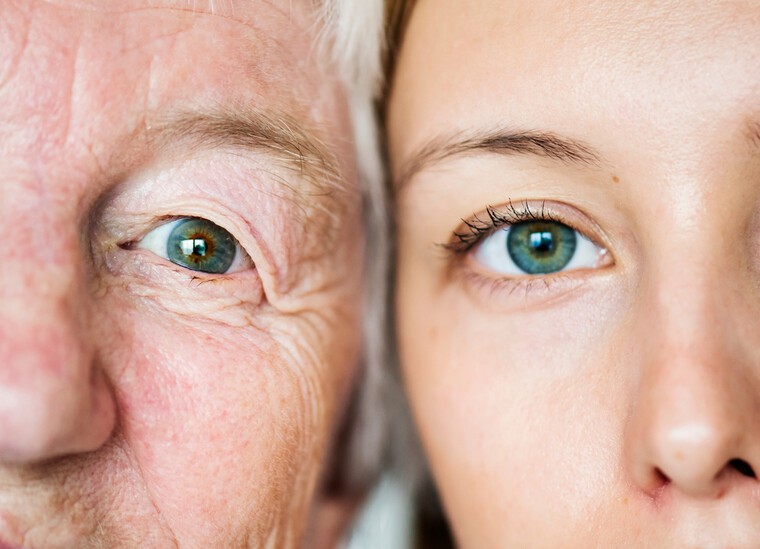
The longing for youth and the fear of aging. In the film <The Substance>, a retired 50-year-old former star regains youth through a mysterious drug. The movie grotesquely portrays one of humanity’s most primal desires. Of course, the story is fictional. But the questions it raises no longer remain within the realm of science fiction. Aging may not be an unavoidable fate after all.
Slow Aging Becomes a Defining Trend
“Slow aging” has become a keyword that runs through Korean society in recent years. It has evolved beyond a simple trend into a cultural phenomenon. From the MZ generation to middle-aged adults, people no longer aim simply to live longer. Instead, they focus on living longer in good health—and above all, on “aging well.”
Online media such as YouTube and blogs are flooded with self-care content like “slow aging routines” and “slow aging diets.” As a result, consumption habits are changing. Choosing multigrain rice over white rice or extra virgin olive oil over regular cooking oil is no longer a special decision. Intermittent fasting, low-sugar snacks, and antioxidant-rich foods have become part of everyday life, not just for health enthusiasts.
This shift has also brought noticeable changes to the food and health supplement industries. Moving beyond traditional supplement-centered markets, high-function products emphasizing antioxidant effects and anti-aging are gaining attention. Plant-based ingredients, microbiome-based solutions, and personalized products using genetic analysis are emerging as new growth drivers.
What stands out is that all these changes are rooted in a shift in how we perceive aging. Aging is no longer an unavoidable destiny. It can be managed. It can be delayed. Perhaps it can even be reversed. This is the new perspective through which we now view aging.
Aging as a Disease
Harvard Medical School geneticist David Sinclair, in his 2019 book Lifespan, defines aging not as an unavoidable natural phenomenon, but as a disease that can be intervened in and treated through science.
This claim is not merely philosophical provocation. Sinclair is a world-renowned geneticist studying the molecular mechanisms of aging. Over decades, he has led research into cellular aging processes such as NAD+ metabolism, sirtuin proteins, and chromatin stability. He has not stopped at theory—he publicly shared the supplements he takes and his biological age measurements. He claims his biological age is more than 10 years younger than his actual age. This sparked debate, skepticism, and anticipation across both the scientific community and the public. For thousands of years, humanity has accepted aging as fate. But scientists like Sinclair now ask: Why must we age? And do we really have to?
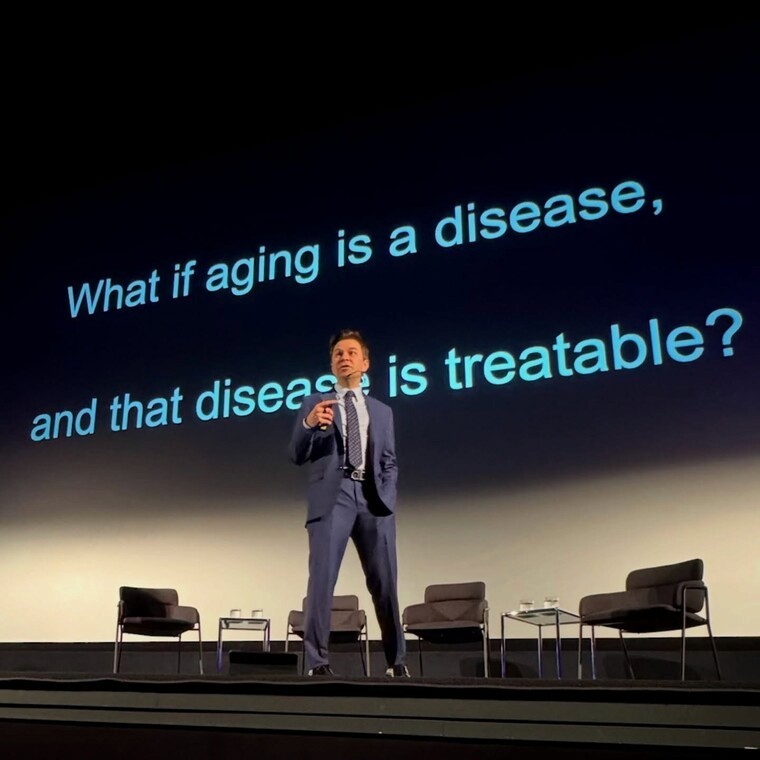
“There is no biological law that says we must age.” — <Lifespan>
Aging is Like Scratches on a CD
According to Sinclair, aging is the process by which cells gradually lose their function. To explain this, he compares DNA within cells to a music CD. At first, the CD plays perfectly, but over time scratches form on its surface. The playback device can no longer read the data correctly. The music becomes distorted. The track still exists, but it no longer plays as it once did.
The DNA sequence itself does not change. However, when epigenetic markers—which regulate gene expression—are damaged, cells can no longer perform their original functions. Sinclair calls this phenomenon “epigenetic information loss.” Based on this, he proposed the Information Theory of Aging. The idea is simple: rather than mutations or telomere shortening, aging occurs because cells gradually lose the ability to interpret and maintain the “information” that defines their identity and function.
This theory has been partially validated through experiments. Sinclair’s team artificially damaged the DNA of young mice. The genetic sequence remained unchanged, but the mice rapidly showed signs of aging—their fur turned gray, organ function declined, and aging-related cells accumulated. This suggests that aging may not simply be the result of cellular wear or genetic damage, but rather a breakdown of the cell’s internal information system.
The Breakthrough of Reversing Time
If so, how can aging be reversed? Sinclair proposes cellular reprogramming as a solution—resetting the biological clock of cells, much like rebooting a computer.
At the core of this technology are the Yamanaka Factors. In 2006, Kyoto University professor Shinya Yamanaka discovered four transcription factors capable of reverting adult cells into stem cell-like states: Oct4, Sox2, Klf4, and c-Myc. This allowed skin cells to be “reset” to an earlier state, a breakthrough that revolutionized biology. Yamanaka was awarded the Nobel Prize in 2012.
However, this approach had limitations. Using all four factors made cells excessively young and risked turning them cancerous. To address this, Sinclair removed the most dangerous factor, c-Myc, and used the remaining three (Oct4, Sox2, Klf4) for a short duration. This method resets cells only partially rather than completely—known as partial reprogramming.
In 2020, Sinclair’s team published results in *Nature*. They injected three genes into aged mice that had lost their vision due to aging. Damaged nerve cells regenerated, and vision was restored. This was not merely a delay of aging—it was considered the first case of reversing aged cells to a younger state. Remarkably, the rejuvenated cells retained their identity: nerve cells remained nerve cells, and retinal cells functioned as retinal cells. In other words, the cells were not reset to stem cells but had their biological clocks rewound while maintaining their roles.
This experiment is significant as the first demonstration, through experimentation, that aging can be reversed biologically. It opens a new perspective that aging may not be an unavoidable fate but a controllable biological process. However, the research is still in its early stages and requires cautious interpretation. Experts note that many variables remain before this can lead to real treatments.
“Scientists around the world are attempting to rewind the biological clock of cells. The road is still long, but the meaning of ‘aging’ is clearly beginning to change.”
From Lab to Clinical Reality
The perspective of aging as a controllable biological target is now expanding beyond laboratories into clinical and industrial fields. Major pharmaceutical companies, biotech firms, and research institutions worldwide are accelerating related studies.
One notable example is the TAME clinical trial (Targeting Aging with Metformin), which uses the diabetes drug metformin. This study, involving approximately 3,000 adults over the age of 65 in the U.S., evaluates whether metformin can delay age-related chronic diseases. It has drawn attention because it treats aging itself—not specific diseases—as a clinical target.
Altos Labs, a biotech company launched in 2022, has also attracted global attention. It secured around $3 billion in initial funding, with Jeff Bezos reportedly among its investors. Altos Labs aims to restore damaged cellular functions through reprogramming technology, ultimately building biological systems capable of recovering from disease and aging. Its board includes leading scientists in epigenetics and regenerative medicine, including Yamanaka.
Other companies such as Calico, Retro Biosciences, and Unity Biotechnology are also actively operating in this field. They target various aging-related pathways, including senescent cell removal, telomere extension, and NAD+ restoration, attracting investments ranging from hundreds of millions to billions of dollars.
A New Way of Living May Emerge
Scientific approaches to aging are entering a new phase. Researchers and companies worldwide are experimenting with ways to rewind the biological clock of cells. The road ahead is long, but through these efforts, the very definition of aging is gradually changing.
In the near future, it may not be unusual to visit a hospital, receive a diagnosis of your biological age, and be prescribed personalized anti-aging interventions. The familiar structures of life—education, work, retirement, old age—may be redefined. Whether aging will one day be overcome like a disease, or remain an inevitable part of human existence, is still unknown. But even now, science is slowly unraveling the long-standing mystery of aging. At the end of this path may lie forms of life we have yet to imagine.
© Den Magazine. Unauthorized reproduction and redistribution prohibited.
Aging
Youth
Biology
Science
Health
Wellness
David
Sinclair